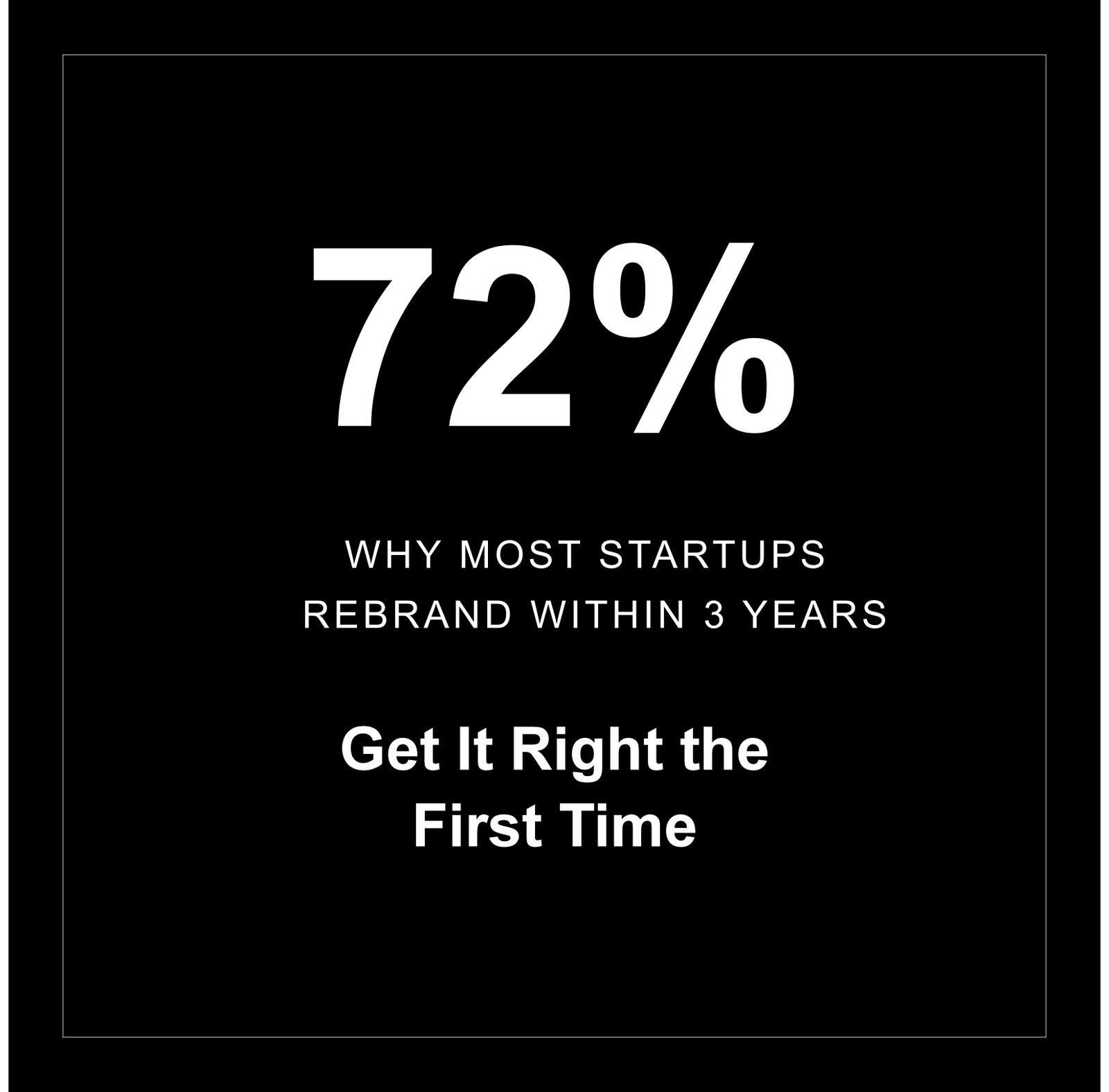

Most founders don’t audit their brand until something breaks. Here’s how to run the check before the cracks show.
Launching a startup without auditing your brand is like shipping a product without QA. You might get away with it. But you probably won’t, and fixing it under pressure post-launch costs three times as much as getting it right beforehand.
At Brandroom, we run brand audits for startups at every stage — pre-seed to Series B. What we’ve found is that most early-stage founders have the same gaps, in the same order. Not because they aren’t smart. Because brand is the thing that feels subjective until it starts costing you deals.
This is the pre-launch version of that audit. Ten questions. Answer them honestly. By the end, you’ll know exactly where your brand stands and what to fix before the world sees it.
Jargon is the refuge of unclear thinking. If your one-liner leans on industry buzzwords, it’s not because your business is complex. It’s because you haven’t yet found the simple, human truth underneath it. The best brand statements are almost embarrassingly plain. “We help small businesses get paid faster.” “We make freight tracking invisible.” That clarity is the foundation everything else is built on.
Red flag: Your team gives different answers to this question.
02. Do you know the single person your brand is speaking to, and can you describe them in a paragraph?
Not a demographic. A person. Their job title, their biggest frustration on a Tuesday afternoon, what they read, who they trust, and what they’re afraid will happen if they make the wrong decision. The narrower and more specific your audience definition, the sharper your brand will be. Brands that try to speak to everyone end up resonating with no one.
Red flag: Your ICP is described as “SMBs” or “anyone who needs X.”
03. What does your brand stand against not just what it stands for?
The strongest brands define themselves by opposition as much as affirmation. Apple stood against beige mediocrity. Stripe stood against payment complexity. Notion stood against rigid productivity software. Knowing your enemy — whether it’s an industry norm, a lazy assumption, or a competitor’s approach, gives your brand a spine. Values without a foil are just platitudes on a website.
Red flag: Your “values” section reads like every other startup’s values section.
04. Is your brand name easy to spell, say, search, and remember?
A name is a brand’s first piece of UX. If people can’t spell it after hearing it once, can’t find it on Google without the exact URL, or keep mispronouncing it at conferences, you have a friction problem baked into your identity. That doesn’t mean your name has to be boring. It means it needs to be intentional. Test it: say it to three strangers and ask them to write it down.
Red flag: You’ve had to spell it out more than twice in the same conversation.
05. Does your visual identity communicate your positioning or just your aesthetic preference?
A dark, moody color palette might feel premium to you. But if your target buyer is a risk-averse enterprise procurement manager, that palette might read as unstable. Visual identity is communication, not decoration. Every color choice, typeface, and spacing decision sends a signal. The question isn’t “does it look good?” — it’s “does it say the right thing to the right person?”
Red flag: You chose colors because you liked them, not because of what they communicate. I’ve encountered this more than a dozen times, and trust me, founders still don’t get it.
Brand voice is not about being “friendly” or “professional.” Those are table stakes. Your voice should be distinctive enough that a reader could recognize your content without a logo. Pick three words that capture exactly how your brand sounds, then audit your landing page, your emails, and your social content. If the words don’t show up in practice, the voice doesn’t exist yet.
Red flag: Your copy sounds like it was written by three different people — because it was.
07. Is your brand story told from the customer’s perspective or the founder’s?
Founders love their origin story. The late nights, the breakthrough moment, the problem they personally experienced. Those details matter, but only insofar as they make the customer feel something. The best brand stories use the founder’s journey to illuminate the customer’s reality. “We built this because we felt your pain” is a bridge. “Here’s how brilliant we are” is a wall.
Red flag: Your About page is mostly about you, not about the transformation you create.
08. Have you stress-tested your brand name and identity against your top three competitors?
Put your brand next to your three biggest competitors. Same font size, same context. Does it stand out or blend in? Does your positioning overlap with theirs or occupy genuinely different territory? This isn’t about being different for its own sake. It’s about owning a distinct position in a real market. If you look and sound like your competitors, you’re competing on price by default.
Red flag: Your brand could be swapped with a competitor’s and nobody would notice.
09. Is your brand built to scale or just to launch?
Many startup brands are built for the first six months. The logo works at small sizes but not on a billboard. The color palette has no secondary system for product UI. The tone of voice works for a scrappy underdog but not for an enterprise vendor. Before you launch, ask: will this brand still work when you’re 10x bigger, in three new markets, with a team of 80? If the answer is no, that’s not a launch problem — that’s a strategy problem.
Red flag: Your brand guidelines don’t exist or fit on a single slide.
10. Does every touchpoint — from your homepage to your invoice — feel like it comes from the same brand?
Brand consistency is not about visual uniformity. It’s about coherence of experience. A customer should feel the same thing reading your email as they do using your product, watching your pitch deck, or talking to your sales team. Map out every touchpoint your customer encounters before, during, and after a purchase. Then ask: does each one reinforce the same promise? Inconsistency is the fastest way to erode trust you haven’t even built yet.
Red flag: Your pitch deck, website, and product feel like they were made by three different companies.
Give yourself one point for each question you can answer with full confidence — no hedging, no “we’re working on it.” Here’s what your score means.
If you scored 0–4
Don’t launch yet. Not because the product isn’t ready, but because a weak brand will make every marketing dollar you spend less effective, every sales conversation harder, and every investor pitch less compelling. Invest two to four weeks in brand foundation work before anything goes public. If you need help, talk to me here
If you scored 5–7
You have a workable foundation. Identify the two or three questions you couldn’t answer cleanly and treat them as priority work in your first 30 days post-launch. Don’t let partial clarity become permanent ambiguity.
If you scored 8–10
You’re in rare company. Most startups reach Series A before they can answer all ten of these questions with confidence. Your job now is to document everything, build governance around the brand, and protect the clarity you’ve built as the team scales.
If your startup disappeared tomorrow, would anyone miss the brand or just the product?
A product fills a gap. A brand builds a relationship. If your answer is “just the product,” that’s not a failure — it’s a starting point. The best time to build a brand people would mourn is before you launch. The second best time is right now.
Run a full brand audit with Brandroom.
We work with founders before, during, and after launch to build brands that hold up under pressure. If you scored below 8, let’s talk.